
Patents & Innovation — Engineering Proprietary Hardware Solutions
Our engineering team continuously develops proprietary hardware mechanisms that solve real-world challenges for signage fabricators and architectural hardware buyers.
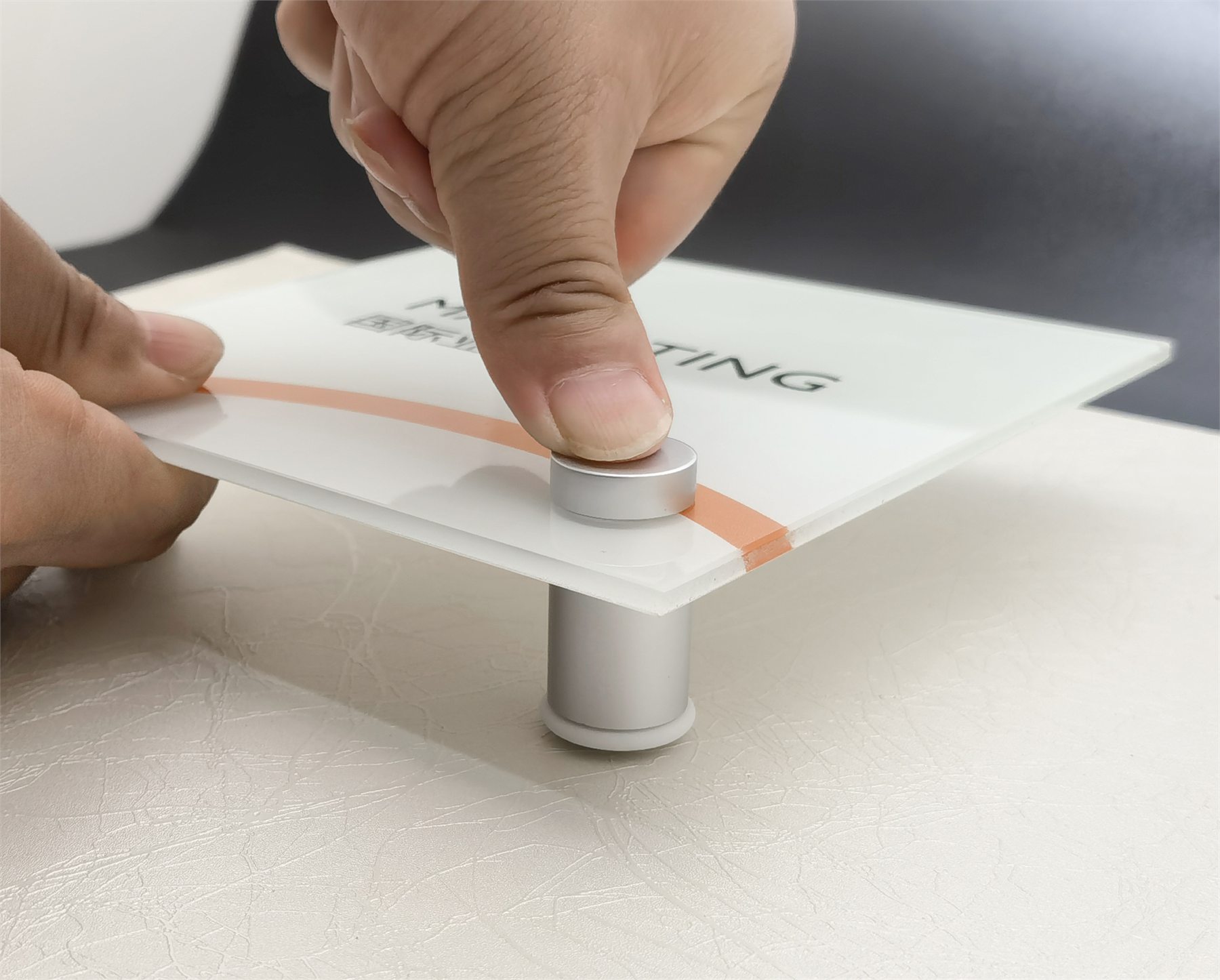
Proprietary Hardware Development at UNIFITTING
UNIFITTING's innovation program is rooted in solving practical engineering problems identified through our distributor relationships and end-user application feedback. Rather than designing for innovation's sake, we focus on developing hardware mechanisms that eliminate failure modes, reduce installation complexity, or expand the application range of our product families.
Our engineering team operates a structured new product development (NPD) process covering concept definition, feasibility analysis, prototype production, performance validation, and manufacturing process development before any new design is released to commercial production.
Where our developments produce novel mechanical solutions, UNIFITTING files patent applications in key commercial markets to protect our investment and secure competitive advantage for our distributor partners who bring these products to market.
Lateral Lock Standoffs — CA-FH & SS Series
UNIFITTING's patented lateral lock system provides edge-grip panel retention without drilling the sign panel face. The clamping mechanism engages through a precision-machined lateral bore — CA-FH aluminum series supports panels 3–14mm thick; SS stainless series (SS-1320, SS-1820) covers the same application in corrosion-resistant material.
Self-Adhesive Sign Standoffs — AP Series
The AP series self-adhesive standoffs carry registered patent protection. AP-1319 and AP-1925 adhesive pin standoffs bond to wood, marble, ceramic tile, glass, and metal without drilling. The AP-XC100 clamp (80–297mm) and AP-Y-005 side clamp extend no-drill mounting to clamp-style hardware configurations.
LED Side Clamp Standoffs — L-C-2530 Series
Patented LED side clamp standoffs combine structural edge clamping (max 8mm panel, Dia. 25mm × H 30mm) with integrated 12V LED illumination in White, Red, Blue, or Green. Available in 2-LED and 4-LED configurations — LED power channel integrated within the standoff body.
Wooden Sign Standoffs — WD Series
WD-1925 and WD-2530 wooden standoffs carry registered patent protection. M6 hanger bolt fixing, max 10mm panel thickness, 4kg max load per pair. Specified for gallery, boutique retail, and specialty interior signage where natural material aesthetics are required.
Plastic Locators — SL-1510 & SL-2110
Patented SL series plastic locators enable precise standoff positioning before fixing, eliminating the measurement error that causes visible misalignment. SL-1510 for 4.2mm bottom hole standoffs, SL-2110 for 5mm bottom hole — compatible with aluminum, brass, stainless, and acrylic standoffs.
XC78 Aluminum Sign Clamp
The patented XC78 aluminum sign clamp provides continuous edge clamping for acrylic and composite panels in 100mm, 150mm, 210mm, and 297mm lengths. M5×5 screw fixing, max 6mm panel thickness — a precision wall-mount solution for frameless sign panel installations.
OEM Product Development for Distributor Partners
For distributor partners requiring proprietary hardware — whether a modification of an existing UNIFITTING product or an entirely new component specification — our OEM development program provides a structured path from initial concept to mass production.
The process begins with an engineering review of the customer's requirement drawings or functional specification. UNIFITTING's engineering team assesses manufacturing feasibility, proposes design-for-manufacture modifications where needed, and produces an NRE (non-recurring engineering) and tooling cost estimate before any commitment to proceed.
Following customer approval, we produce prototype samples for fit, form, and function validation. After sample approval, tooling and production setup are completed and a first production run is manufactured to confirm all specifications before full volume supply commences.

Innovation Driven by Distributor Intelligence
The most productive source of product innovation at UNIFITTING is our distributor network. Sales teams and technical staff at our distributor partners are in daily contact with end-users specifying, purchasing, and using our hardware. This creates a continuous intelligence stream about application challenges, product failures, feature requests, and market opportunities.
We actively solicit this input through annual product review meetings with key distributor partners and through our technical support inquiry process — where customer feedback about product limitations or application difficulties is logged and reviewed by our engineering team on a monthly basis.
Distributors seeking to raise a product development inquiry or propose a new product requirement should contact our sales team, who will route the inquiry to engineering for assessment.
Submit a Product Development Inquiry
Manufacturing Infrastructure Enabling Innovation
UNIFITTING's patent and innovation capability is underpinned by our in-house manufacturing infrastructure. The same CNC machining centers, surface treatment lines, and quality systems used in standard production are available for prototype manufacturing — which means our engineering prototypes are produced under real production conditions, not in a separate toolroom environment.
This means prototype lead times are measured in weeks, not months, and prototype samples reflect true production surface finish and dimensional quality from the first iteration. It is a significant advantage in hardware product development cycles.
Explore Our Manufacturing Capabilities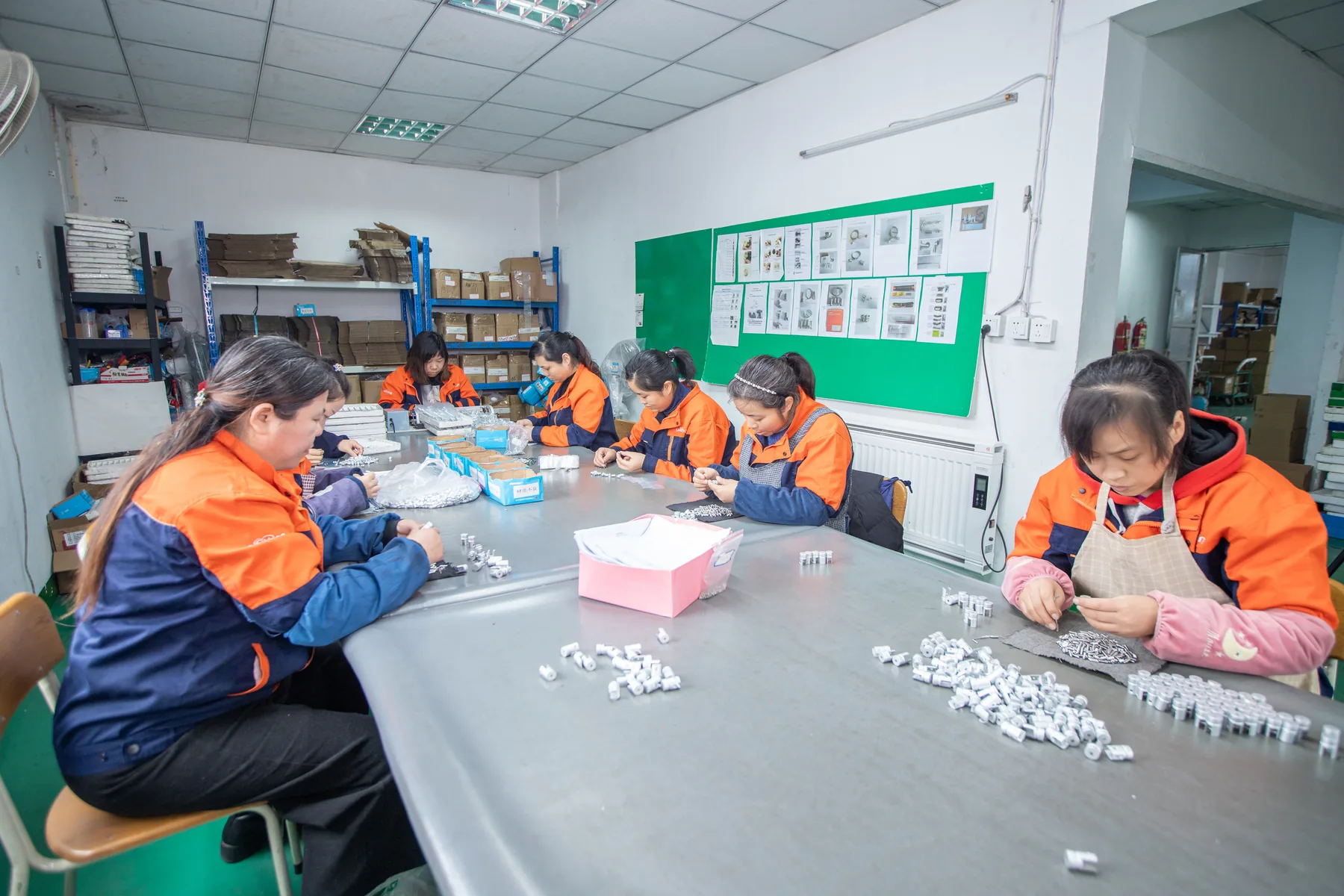
Develop Proprietary Hardware with UNIFITTING
Submit an OEM inquiry to discuss custom hardware development, private label, and proprietary hardware programmes for your distribution business.
Proprietary Hardware Development — 20+ Years of Engineering Experience
UNIFITTING's engineering team develops proprietary hardware mechanisms that solve real application challenges for signage fabricators and architectural hardware buyers — prototyped on live CNC equipment in weeks, not months.
UNIFITTING Factory-Direct Hardware Manufacturer: plan your order
For distributors, signage manufacturers, architects, commercial buyers, and OEM procurement teams, selecting sign standoffs, cable display systems, picture hanging hardware, LED sign components, and OEM architectural hardware starts with the installation requirements. For company qualification, distributor sourcing, supplier evaluation, technical specification, and wholesale procurement, compare dimensions, material, finish and fixing method before choosing a model.
Include your model codes, quantities, destination country and required delivery date in your inquiry. For custom parts, include a drawing or sketch and identify the dimensions that must be maintained. Ask the sales team to confirm minimum quantities, sample availability, production time and freight terms for your order.
Before confirming a specification
- Check panel thickness, hole sizes, mounting surface and clearance against the model drawing.
- Confirm material and finish suitability for the installation environment.
- Request the applicable load rating and fixing requirements; capacity depends on the complete installation.
- Confirm finish codes and sample approval before ordering a production batch.
- Keep approved model codes, drawings and packaging requirements for repeat orders.
Develop Proprietary Hardware with UNIFITTING
Submit an OEM inquiry to discuss custom hardware development for your distribution program.