
Quality Control for Precision Sign Hardware Manufacturing
Multi-stage quality control covering material verification, in-process dimensional inspection, 100% thread gauging, finish measurement, and pre-shipment final inspection on every production order.
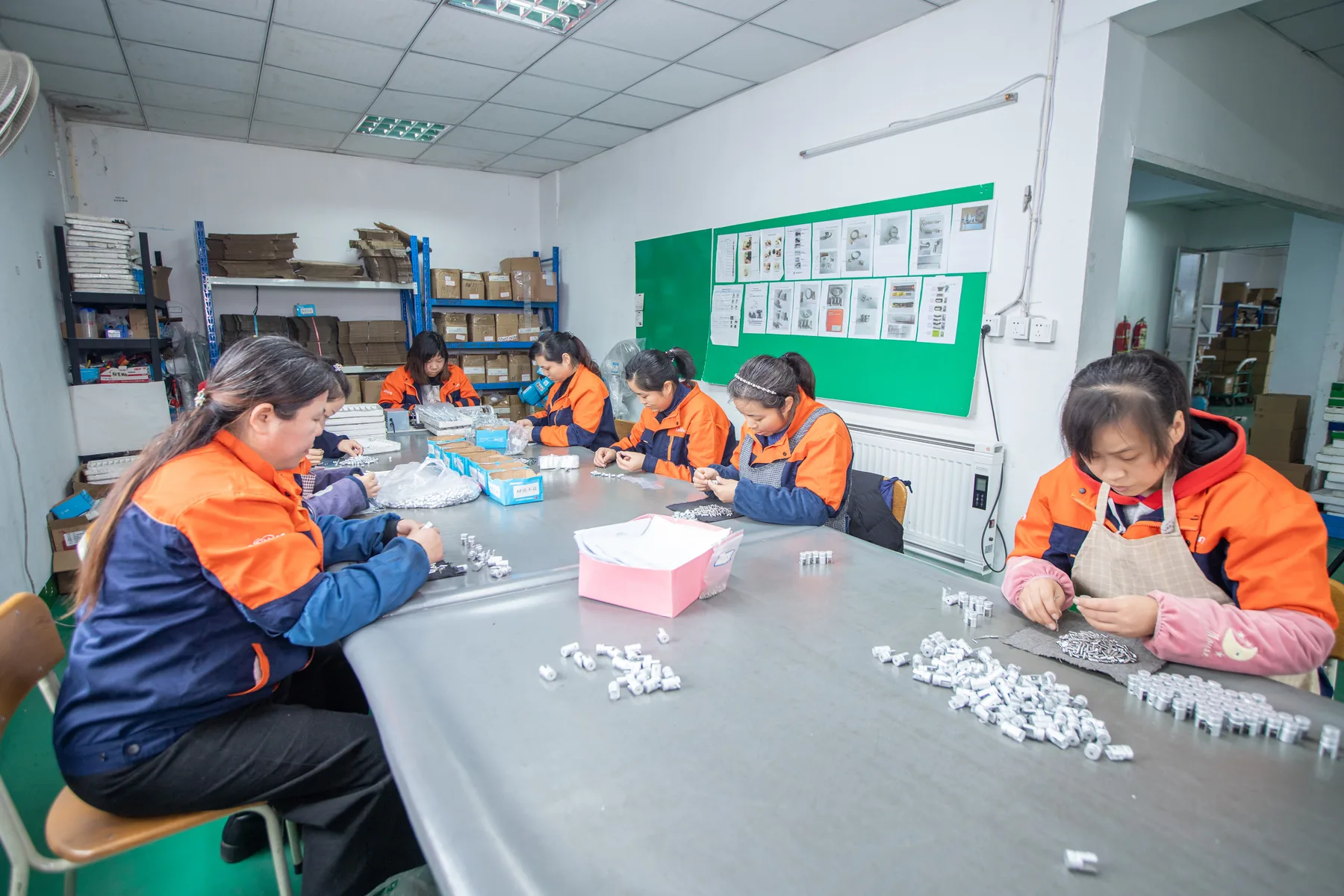
Multi-Stage Quality Inspection for Sign Hardware
Commercial sign hardware is a structural specification item — dimensional accuracy, thread integrity, and finish consistency directly affect professional installation outcomes and end-client satisfaction across every project. UNIFITTING operates a documented, multi-stage quality control program covering the full production sequence.
Quality records — including batch inspection data, material verification reports, and finish test results — are maintained for all production orders. Documentation is available to approved distribution partners and OEM accounts for supplier qualification purposes.
Quality Control Stages
Inspection Standards for Architectural Hardware
UNIFITTING's inspection processes are calibrated to the dimensional and finish requirements of architectural specification hardware — where appearance, consistency, and reliable fit take precedence over tolerance relaxation. Our inspection standards address the specific failure modes that affect commercial sign installations: thread seizure from out-of-tolerance profiles, finish inconsistency between batches, and dimensional variation in high-visibility architectural products.
Quality Documentation for Distributor and OEM Accounts
Batch inspection records, material certifications, finish test data, and pre-shipment inspection reports are available to approved commercial accounts for supplier qualification and quality management system documentation. Third-party inspection at our facility can be arranged for large OEM orders. Contact our sales team to discuss quality documentation requirements for your account.
Source Precision Sign Hardware Factory-Direct
Request wholesale pricing, technical documentation, or sample orders from our Ningbo CNC manufacturing facility.
Multi-Stage QC — Incoming Material Through Pre-Shipment
UNIFITTING's quality programme covers every stage of production from incoming material verification through in-process inspection to pre-shipment final checks. All hardware is verified against engineering specifications before dispatch.
Quality Control for Precision Sign Hardware Manufacturing: specification notes for distributors, signage manufacturers, OEM procurement teams, and architectural hardware buyers
Quality Control for Precision Sign Hardware Manufacturing supplier pages need to answer two questions at the same time: what the hardware does on site, and why the supplier can deliver it consistently. UNIFITTING is positioned as a factory-direct manufacturer, so the page content focuses on product specification, CNC manufacturing capability, material traceability, surface finish control, wholesale supply, and export documentation rather than generic promotional claims.
For factory qualification, distributor sourcing, OEM manufacturing, quality inspection, and export supply, buyers usually compare hardware by material grade, finish consistency, load requirement, panel thickness, installation method, available drawings, lead time, and packaging format. A useful page therefore has to connect the product or service name with practical procurement details: stainless steel 304/316, T6 aluminium, C360 brass, anodised colours, chrome and satin finishes, thread gauging, sample approval, carton labelling, and repeat-order availability.
UNIFITTING manufactures CNC-machined sign standoffs, cable display hardware, picture hanging hardware, LED sign components, and OEM metal parts in Ningbo, China with in-house CNC machining, finishing, assembly, inspection, and export packing. That production model gives distributors and project buyers one accountable source for standard SKUs, custom dimensions, OEM programmes, private-label packaging, and technical documentation. It also supports stronger search relevance for terms such as factory-direct sign hardware manufacturer, wholesale sign standoffs, cable display system supplier, picture hanging system manufacturer, and OEM architectural hardware.
A complete sourcing decision should also consider the commercial path after the first sample. Buyers need to know whether the same product can be repeated across future orders, whether finish codes remain consistent between production batches, whether model numbers map cleanly to catalog documentation, and whether the factory can support urgent replenishment as well as planned container shipments. For distributor accounts, these details affect stock planning, customer service, and long-term margin protection more than the initial unit price alone.
For architects and project specifiers, the most useful content is not only a product photo. It is the combination of application guidance, dimensional references, material notes, installation diagrams, and a clear route to request drawings or certificates. UNIFITTING pages are structured around those specification tasks so that a buyer can move from product selection to quotation with fewer unanswered questions. The same structure also improves organic search coverage because each page connects the primary keyword with supporting terms such as CNC machining, wholesale supply, stainless steel hardware, aluminium standoffs, brass components, installation guides, export packaging, and OEM manufacturing.
What this page should help a buyer confirm
- The main keyword, Quality Control for Precision Sign Hardware Manufacturing supplier, is visible in the H1/H2 structure and supported by related terms.
- The page explains suitable applications, materials, finishes, and installation considerations.
- The supplier position is clear: factory-direct manufacturer, not a trading company or reseller.
- Technical resources, drawings, material specifications, and quote paths are easy to reach.
- Internal links connect product, manufacturing, resources, distributor, and contact pages.
Specification Fit
Match panel thickness, fixing method, material grade, finish, and installation environment before confirming a product series. This prevents misalignment between visual design, installer preference, and hardware performance.
Manufacturing Control
Use factory-direct supply when tolerance, finish repeatability, documentation, and repeat-order consistency matter. Direct access to production data makes custom requests and issue resolution faster.
Wholesale Readiness
Confirm MOQ, packaging format, sample availability, freight terms, and export documentation before placing volume orders. Reliable wholesale supply depends on repeatable packing, labelling, and replenishment processes.
Technical Support
Use drawings, material specs, and installation diagrams to reduce project risk for architects and installers. Clear documentation helps sales teams quote accurately and helps contractors install correctly.
How UNIFITTING supports quotation and repeat orders
For wholesale quotations, UNIFITTING can review target models, finish codes, annual volume, packaging preference, and destination market before recommending the most practical supply route. Standard catalog products are normally quoted from existing production data, while custom dimensions or private-label packaging require engineering review and sample confirmation.
Repeat orders are supported through stable item codes, batch inspection records, material traceability, and documented carton labels. This is important for distributors building a long-term hardware line because customers expect the replacement product ordered next year to match the product supplied today.
When sending an inquiry, the most helpful details are product name or model code, material, finish, panel thickness, expected quantity, destination country, required documents, and whether the order is for stock, a live project, or OEM development. Clear inquiry data helps the sales and engineering teams respond with accurate pricing, realistic lead times, and the correct technical resources. If drawings are not available, photos, sketches, installation notes, or current supplier references can still help our team identify the closest catalog item or confirm whether a custom part is required.
Ready to Source Sign Hardware Factory-Direct?
Contact our technical sales team to discuss wholesale supply, OEM requirements, or sample requests.